
Fixed expenses are the costs you owe in roughly the same amount every period, like rent, an insurance premium or a car payment. Discretionary expenses are the things you could choose to cut, like dining out, streaming and vacations. The two labels answer different questions. "Fixed" tells you how a cost behaves. "Discretionary" tells you whether you could do without it. That is why one expense can be both, and why mixing them up leads to budgets that look tidy on paper and fall apart by the 20th of the month.
TL;DR
- Fixed expenses stay the same (or nearly) from month to month. Discretionary expenses are wants you control. They are not opposites, so a cost can be fixed and still optional, such as a gym membership.
- Fixed describes the amount. Discretionary describes the need. Variable, the third term people search for, describes whether the amount moves with usage.
- Pay fixed costs first, then split what is left between flexible needs and wants. Reviewing your last few statements is the fastest way to see where the money goes.
- If you carry balances on several credit cards, discretionary spending that lands on a card costs more than its sticker price, because interest is added on top.
- Subscriptions are the classic gray area: fixed in amount, optional in practice.
Table of Contents
- What a fixed expense is
- What a discretionary expense is
- Discretionary vs. fixed: the real difference
- Where the lines blur
- Examples side by side
- A worked example
- How to use these categories to build a budget
- Why this matters more when you carry credit card balances
- Perspective: why we sort expenses by what they cost you on a card
- Put your categories to work with Finja
- FAQ
- Sources
What a fixed expense is
A fixed expense is a necessary cost that stays the same each month. Wells Fargo's financial education guidance gives rent, car payments and insurance as examples. The FDIC's Money Smart educator guide adds a useful detail: fixed expenses generally do not change from month to month, though they may change over a longer period. Your rent is fixed until the lease renews. Your insurance premium is fixed until the policy does.
Two things about timing trip people up:
- Fixed does not mean monthly. An annual insurance premium or a semiannual property tax bill is fixed, but it arrives on its own schedule. Budgeters who only list monthly bills get ambushed by these.
- Fixed does not mean permanent. You can renegotiate, refinance or move. Fixed means the amount is set for the period you are budgeting, not that it is carved in stone.
Typical fixed expenses in a household budget include rent or mortgage payments, car payments, other loan payments, insurance premiums, property taxes, phone bills, childcare, tuition and gym memberships, a list that Bankrate's budgeting guidance offers as examples of costs that may be fixed.
What a discretionary expense is
A discretionary expense is a cost for something you want rather than something you need. Investopedia describes it as a non-essential cost you can forgo without significantly affecting day-to-day life or survival, with dining out, entertainment, vacations and luxury purchases as typical examples. The same source treats housing, taxes, debt and groceries as mandatory, non-discretionary spending.
The Wells Fargo guidance frames discretionary spending as the part where you have more control over what you buy and how much you spend, such as coffee-shop visits, movies and eating out. That word, control, is the practical test. Ask: "If money got tight next month, could I change this without a serious consequence?" If yes, it is discretionary, at least in part.
The "in part" matters. Groceries are necessary, but the difference between a $90 weekly shop and a $160 weekly shop is mostly choice. Most real budgets have a band of essential spending with a discretionary layer on top of it.

Discretionary vs. fixed: the real difference
The cleanest way to see it is that the two words sit on different axes:
- Fixed vs. variable is about the amount. Does it come out the same every period, or does it move with usage?
- Essential vs. discretionary is about the need. Can you choose to stop paying it?
The CFPB's building-block guide on fixed and variable expenses says fixed expenses generally cost the same each month while variable expenses change. It also notes that something like a utility bill can straddle the line because the amount changes with usage. Forbes Advisor makes the other half of the point: variable spending includes both essential items, like a necessary doctor visit, and optional ones, like a luxury purchase.
Put the two axes together and you get four boxes, which is more useful than a simple either/or.
| Essential (need) | Discretionary (want) | |
|---|---|---|
| Fixed amount | Rent, mortgage, car payment, insurance premium, minimum loan payments | Gym membership, streaming bundle, premium phone plan upgrade |
| Variable amount | Groceries, electricity, gas for commuting, medical copays | Restaurants, shopping, travel, hobbies, impulse purchases |
So, to answer the question people actually type: is a fixed expense a discretionary expense? Usually no, but sometimes yes. Most fixed costs are necessary, which is why they get paid first. The exceptions are fixed-amount wants, and those are the easiest savings in a budget, because you only have to decide once.
Where the lines blur
Subscriptions
A streaming service charges the same amount on the same day every month, so it behaves like a fixed expense. You would never survive or starve without it, so it is also discretionary. Budget it as fixed (so it shows up in your predictable total) but review it as discretionary (so it gets cut first when you need room). We go deeper on spotting these charges in our piece on how to track subscription charges across multiple cards.
Utilities and phone bills
Electricity feels like a fixed bill because it arrives monthly, but the amount tracks usage, so it is variable. A flat-rate internet plan is fixed. Both are essential for most households. The CFPB's guidance acknowledges this overlap, which is why a good budget uses a typical amount for variable essentials and reviews it every few months.
Groceries
Groceries are a variable, mostly essential expense. Treat the baseline as a need and anything beyond it as a want. Splitting the category into "staples" and "extras" gives you a more honest picture than one lump.
Debt payments
A minimum payment on a loan or card is a fixed, non-discretionary obligation. What you pay above the minimum is a choice, and on high-interest balances it is usually the most valuable choice in your budget. A credit card statement balance is not a "fixed expense" in the strict sense, since it depends on what you charged, but the minimum due is a hard commitment.
Discretionary fixed costs (a business term worth knowing)
If you read accounting material, you will meet the phrase "discretionary fixed cost." OpenStax's managerial accounting text uses it for costs that stay constant in total but that management can postpone in some periods, such as advertising campaigns and employee training. The takeaway applies to your household too: "fixed" does not automatically mean "untouchable." The same text notes that cutting such costs permanently can cause negative effects, which is a good reminder that cancelling everything optional is not always the wisest plan. A fitness membership you use three times a week is discretionary on paper and valuable in practice.
Examples side by side
| Expense | Fixed or variable? | Need or want? | How to treat it |
|---|---|---|---|
| Rent or mortgage | Fixed | Need | Pay first |
| Car loan payment | Fixed | Need | Pay first; refinance only if the math works |
| Insurance premium | Fixed (may be annual) | Need | Set aside monthly if billed yearly |
| Minimum card payment | Fixed once the statement posts | Need | Never miss it |
| Gym membership | Fixed | Want (mostly) | Keep only if you use it |
| Streaming services | Fixed | Want | Review every quarter |
| Electricity | Variable | Need | Budget a typical amount |
| Groceries | Variable | Mostly need | Split staples from extras |
| Dining out | Variable | Want | Set a monthly cap |
| Travel | Variable (lumpy) | Want | Save toward it in advance |
A worked example
Here is an illustrative budget. The numbers are made up for the example and are not benchmarks.
Say your take-home pay is $4,500 a month.
- Fixed, essential: rent $1,500, car payment $350, insurance $180, phone $60, minimum card payments $120. Total: $2,210.
- Variable, essential: groceries $450, utilities $160, gas $140. Total: $750.
- Fixed, discretionary: streaming and gym $75.
- Variable, discretionary: dining out, shopping, entertainment $600.
That is $3,635, leaving $865 unassigned. Many people see a number like that and assume it will cover savings or extra debt payments. In practice it tends to leak into the variable discretionary line, because that is the line that has no natural ceiling.
The fix is to give the leftover a job before the month starts. Move $400 to an extra payment on your highest-interest card, $250 to savings, and cap the variable wants at $600. The fixed discretionary $75 is worth a quick audit: cancelling a service you barely use is a $20 or $30 monthly gain that requires one decision, not ongoing willpower.
How to use these categories to build a budget
The categories matter only if they change what you do. A workable sequence:
- List fixed costs first. Include the annual and quarterly ones, converted to a monthly set-aside. Stockton University's need-or-want exercise makes the same point: fixed costs are set aside first, and what remains goes to flexible and discretionary spending.
- Pull three months of statements. Bank and card statements show what variable spending really looks like. Memory underestimates it.
- Mark each variable line as need, want or mixed. Split the mixed ones, like groceries, into a baseline and an extra.
- Set a limit for each want. A cap you can see beats a vague intention.
- Attack the fixed costs that are too big. Forbes Advisor notes that fixed expenses make a budget more predictable and simplify methods like zero-based or 50/30/20 planning. If fixed costs eat too much of your income, the lever is renegotiating, replacing or eliminating them: refinancing a car, downsizing housing, or switching memberships. For a mortgage, recasting versus refinancing is a break-even calculation worth running before you commit.
- Review quarterly. Rent renews, premiums rise and subscriptions creep.
If you use a percentage framework, our guide to the 50/30/20 budget rule and where it breaks shows how needs, wants and savings map onto these categories, and what to do when your fixed costs alone exceed 50%.
One caution from the accounting side: OpenStax says splitting costs into committed and discretionary fixed is mainly a long-range planning tool, not something you need for simple monthly tracking. For a household, two labels per expense is plenty.
Why this matters more when you carry credit card balances
With cash, a $60 dinner costs $60. On a card where you carry a balance, it costs $60 plus interest until you pay it off. That makes discretionary spending the most expensive kind of spending for anyone revolving debt, and it makes the line between "fixed" and "discretionary" more consequential.
Three patterns show up again and again with people who juggle several cards:
- Fixed bills scattered across cards. Autopay for insurance on one card, a phone bill on another, streaming on a third. Nobody sees the full picture, and a subscription you forgot keeps charging.
- Wants charged to the highest-APR card. The card you reach for is not always the card that costs least to carry.
- Budgets that ignore statement timing. A monthly category limit can look fine while a card's due date lands before your paycheck does. We cover this in setting category budgets that respect card timing and in budgeting with three or more cards by syncing to paychecks.
A practical approach is to tag every recurring charge as fixed-essential, fixed-discretionary or variable, then see which card each one hits. Once you know your fixed floor, you know how much room is left for extra payments. From there, deciding which card to pay first or how high-interest card prioritization saves money becomes a straightforward exercise instead of guesswork. And if the wants have already outrun the budget, our 72-hour plan to stop a credit card debt spiral is a good next read.
It also helps to measure the result. Tracking the interest you actually pay each month, as we explain in why tracking interest paid monthly matters, tells you whether the discretionary cuts are showing up where they should.
Perspective: why we sort expenses by what they cost you on a card
At Finja we spend our time with people who hold several credit cards, and we see the same thing in almost every case. The textbook categories are fine, but they stop one step too early. Knowing that dinner out is discretionary does not tell you which card paid for it, what that card's APR is, or how many days remain before its statement closes.

So we think about expenses in two passes. First, the classic sort: fixed or variable, need or want. Second, the card question: which account carries it, and does that account carry a balance? A $15 fixed-discretionary subscription on a card you pay in full each month is trivial. The same $15 on a card you are carrying at a high rate is a small recurring leak that compounds. That is why we focus on interest cost and credit health rather than rewards: the spending decision and the payment decision are the same decision viewed at different times.
Our advice is simple. Do not try to cut everything optional. Pick the two or three discretionary lines that give you the least joy per dollar, cut those, and let the freed-up money go to your costliest balance. Keep the things you love.
— Grace K.
Put your categories to work with Finja
If your expenses are spread over several cards, the sorting is the hard part, and it is the part software can do well. Finja, your AI-powered credit card coach, shows all your cards in one place, tracks credit health, offers budgeting tools and spending limit controls, and recommends payment timing and amounts aimed at reducing the interest you pay. It is built for people with multiple cards who want clarity rather than another general-purpose budgeting app.
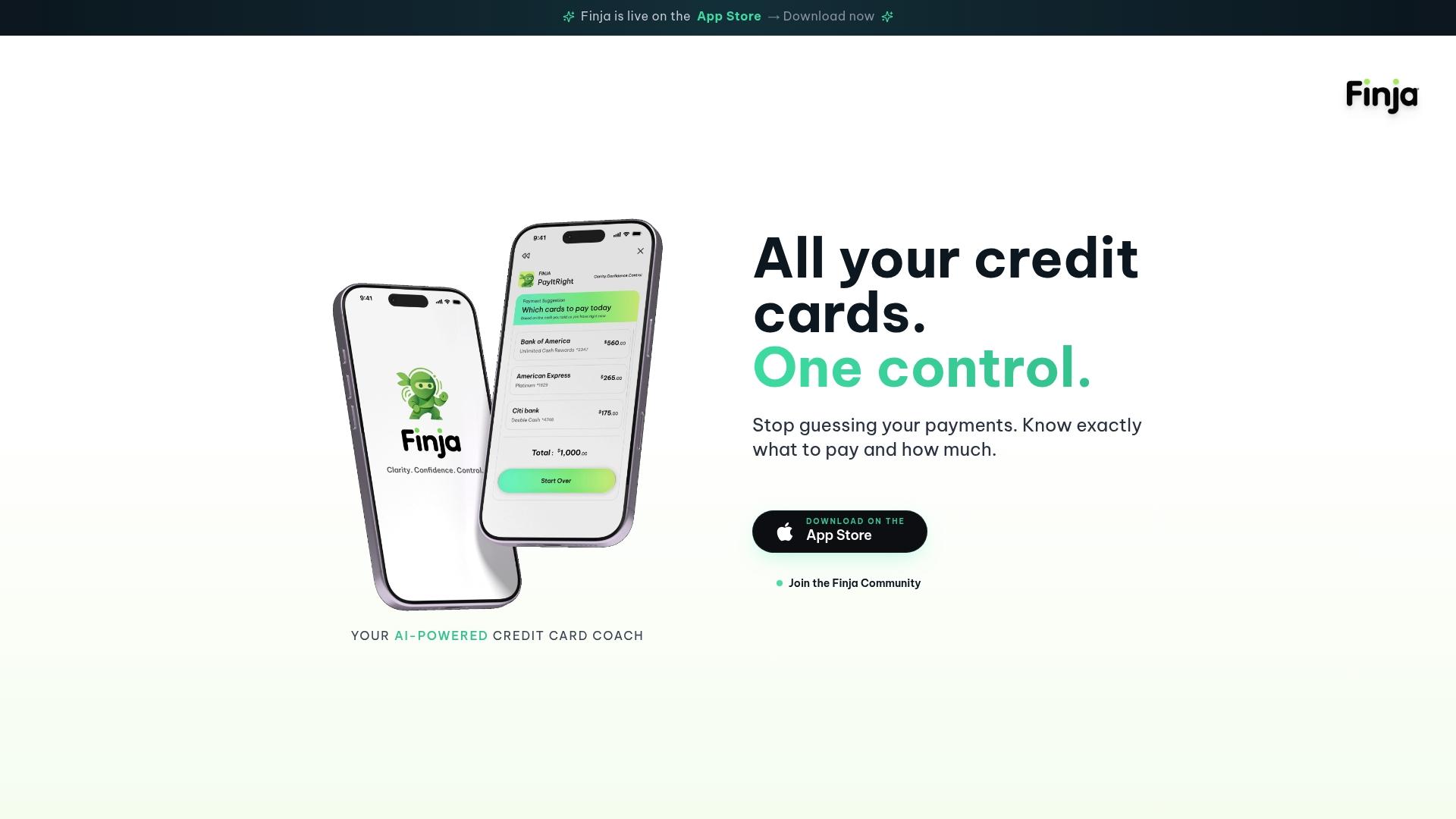
Start by looking at your cards together. Seeing fixed bills, subscriptions and everyday wants on one screen usually makes the first cut obvious.
FAQ
Is a fixed expense a discretionary expense?
Usually not. Fixed expenses like rent, insurance and loan payments are necessary, while discretionary expenses are wants. But the labels measure different things, so some costs are both: a gym membership or streaming plan has a set price and can be cancelled. Budget those as fixed and review them as discretionary.
What are five examples of fixed expenses?
Rent or mortgage payments, car payments, insurance premiums, student or other loan payments, and phone bills are common ones. Property taxes, childcare, tuition and gym memberships also often qualify, according to Bankrate's budgeting guidance. Check each against your own bills, since the amount has to stay steady for you to call it fixed.
What is an example of a discretionary expense?
Dining out is the classic one. Entertainment, vacations and luxury purchases are others, per Investopedia. If you could skip it for a few months without a serious consequence, it belongs in this group.
What is the difference between fixed and variable expenses?
Fixed expenses generally cost the same every month, while variable expenses change from month to month, as the CFPB's building-block guide explains. Utilities are the common gray area because the amount depends on how much you use. Variable spending can be essential, like groceries, or optional, like shopping.
Which should I cut first, fixed or discretionary expenses?
Start with discretionary ones, since they are quick to change and carry no penalty. If that is not enough, move to fixed costs, which take more effort but save more over time: renegotiating, refinancing or switching plans. Cutting a single large fixed cost often beats trimming ten small wants.
Sources
- Investopedia: A Guide to Discretionary Expenses
- Wells Fargo: How to Calculate Your Expenses
- FDIC: Money Smart for Young People, Grades 6 to 8 Educator Guide
- Bankrate: Fixed Expenses vs. Variable Expenses
- CFPB: Differentiating Fixed and Variable Expenses
- Forbes Advisor: Fixed vs. Variable Expenses
- OpenStax: Identify and Apply Basic Cost Behavior Patterns
- Stockton University: Need or Want? Fixed, Flexible or Discretionary Expense
- CompareSpot: Recast vs. Refinance