
Most credit card refunds post within 3 to 14 business days, often closer to one or two weeks for a typical purchase return. Closed accounts, shipping returns, or disputes can stretch that to several weeks. If you're past the normal window, the escalation checklist below walks you through exactly who to contact and what to ask for.
TL;DR:
- For shipped returns, add shipping and inspection time; closed accounts commonly add two to four weeks because issuers route credits manually.
- Check online account activity after three to seven business days; statements can lag a posted credit until the next billing cycle.
- If no credit appears after a week, ask the merchant for its processing date and trace number, then give both to your issuer.
- For a closed account, send a written refund request; Regulation Z requires issuers to return a credit balance within seven business days.
- File an FCBA dispute within 60 days of the statement showing the error; issuers must acknowledge it within 30 days and resolve it within 90.
Table of Contents
- How a refund travels from merchant to your account
- What the typical timeline brackets actually mean
- Why refunds get delayed and who is usually responsible
- Step-by-step escalation: when to wait, call, or dispute
- Your legal protections under Regulation Z and the FCBA
- Troubleshooting checklist and sample messages to send
- What a reasonable wait actually looks like
- How Finja helps you keep track while you wait
- FAQ
- Sources
How a refund travels from merchant to your account
A refund is not a single event. It is a handoff between four parties, and each one adds a little time before the credit shows up on your end.
- The merchant initiates the credit in its payment system, which can happen instantly or only after it confirms a returned item was received.
- The payment processor batches that credit with other transactions and routes it toward the card network.
- The card network (Visa, Mastercard, American Express, or Discover) forwards the credit to your issuing bank.
- Your issuer posts the credit to your account, which may trigger a manual review if your account is flagged for fraud or has been closed.
Processors typically run in batches rather than processing every transaction the moment it happens, so a refund issued late on a Friday might not move until the next business cycle. Closed accounts break the normal automated path entirely: instead of posting straight to your card, the credit often has to be routed manually by a bank employee, which is slower and sometimes results in a mailed check instead of an electronic posting.
Statement timing adds a separate layer of confusion. A refund can post to your account balance days before it ever shows up on a printed or emailed statement. If your statement closes the same day the credit arrives, you won't see it reflected until the next statement cycle, even though the money has already been applied. Checking your online account activity, rather than waiting for a statement, is the fastest way to see whether a refund has actually landed.
What the typical timeline brackets actually mean
Refund speed depends heavily on what triggered it. A few concrete brackets help set expectations.
Refunds to closed accounts commonly add two to four extra weeks compared with a standard refund, because issuers have to route the credit manually rather than letting it post automatically.
- Instant to 72 hours: usually reserved for refunds the merchant processes immediately, such as a canceled order that never shipped.
- 3 to 14 business days: the typical window for a standard return once the merchant confirms receipt and issues the credit.
- A wait of several weeks or more is common for refunds involving shipped returns, manual fraud review, or accounts that have been closed or canceled.
A return that requires shipping the item back adds the shipping and inspection time on top of the standard processing window, since the merchant usually won't issue the refund until it physically receives and checks the returned product. Disputes and chargebacks run on an entirely different, longer clock, which the escalation section below covers.
Because posting and statement timing are separate, checking your issuer's app or online portal is more reliable than waiting for your next paper or email statement. A credit can sit correctly on your account for a week or more before it ever appears on a formal statement.
Why refunds get delayed and who is usually responsible
Most delays trace back to one of three points in the chain: the merchant, the processing layer, or your issuer.
- Merchant-side delays happen when a store hasn't received or inspected a returned item yet, or when its policy defaults to store credit instead of a card refund.
- Processor and network delays happen because of batch processing windows, weekends, and holidays, which can add a few business days without anything actually being wrong.
- Issuer-side delays happen when a refund has to be manually matched to a closed or canceled account, or when a fraud flag holds the credit for review.
- Logistics issues, like a lost return shipment or tracking that never updates, can stall the entire process before the merchant even initiates a refund.
Pro Tip: If you paid with a method that settles outside the traditional card network, such as certain cryptocurrency payment services, chargeback protections work differently and refunds depend entirely on the merchant's cooperation, so confirm the merchant's refund policy before you buy.
Holidays and weekends matter more than most people expect, since card networks and banks often don't process batches on non-business days, which can silently add two or three days to a refund that looks "stuck."
Step-by-step escalation: when to wait, call, or dispute
Follow this order before jumping straight to a formal dispute, since disputes take longer to resolve than a simple merchant or issuer inquiry.
- Wait and check for the first 3 to 7 business days: confirm the merchant's refund confirmation email, check your return's tracking status, and look at your online account activity rather than your statement.
- Contact the merchant if nothing has posted after a week: ask for the refund confirmation ID, the exact date it was processed, and a trace or reference number you can hand to your issuer.
- Contact your card issuer if the merchant confirms the refund was sent but nothing has posted: use a secure message through the issuer's app or website, and for a closed account, send a written request by mail or secure message so you have a timestamped record.
- File a formal dispute only if the merchant won't cooperate or you believe a billing error occurred, since the FCBA gives you 60 days from the statement date that first showed the problem to file.
When you contact either party, bring your documentation with you:
- The order number and return tracking number.
- The merchant's refund confirmation email or reference ID.
- Dates of the return, the merchant's refund confirmation, and your most recent statement.
Once you file a dispute, your issuer must acknowledge it within 30 days and resolve it within two billing cycles, or 90 days at the outside, under FCBA rules. The FTC cautions that disputes work best for non-cooperative merchants or genuine billing errors, not as a shortcut to speed up an otherwise normal refund that's simply still in transit.
Your legal protections under Regulation Z and the FCBA

Two federal rules give you real leverage if a refund stalls, and both are worth knowing before you escalate.
Issuers must refund a credit balance within seven business days of receiving your written request, under Regulation Z, 12 CFR §1026.11. That clock only starts once you put the request in writing, which matters most for closed or canceled accounts where a refund can't post automatically.
- Regulation Z governs how issuers must treat credit balances sitting on your account, including balances left over after a closed card.
- A written request, sent through a secure message or mailed to the address on your last statement, triggers the seven-business-day rule and gives you a dated record if you need to escalate further.
- The FCBA requires a dispute to be filed within 60 days of the statement date showing the error, with issuer acknowledgement in 30 days and resolution within two billing cycles or 90 days.
- The CFPB accepts complaints against issuers that fail to meet these obligations, and that complaint should include your dates, reference numbers, and any written requests you already sent.
File a CFPB complaint only after you've tried the merchant, the issuer, and a written request where applicable. Jumping straight to a federal complaint without that paper trail usually just slows down your own case.
Troubleshooting checklist and sample messages to send
Work through this order before escalating further:
- Confirm the merchant actually initiated the refund and get written confirmation.
- Save that confirmation, including any trace or reference number.
- Check your issuer's online account activity, not just your statement.
- Ask your issuer directly for the expected posting date if nothing has shown up.
- For a closed account, send a written refund request to start the seven-business-day clock under Regulation Z.
Pro Tip: When a merchant insists it already refunded you but nothing has posted, ask for the exact trace number and processing date, then relay both directly to your issuer rather than describing the issue secondhand.
A short message to a merchant might read: "Can you confirm the refund trace number and the date it was sent to my card issuer?" A written request to an issuer for a closed account might read: "I am requesting, in writing, that the credit balance on my closed account [account number] be refunded within seven business days per Regulation Z."
What a reasonable wait actually looks like
Expect most refunds within one to two weeks, with closed accounts or shipped returns reasonably running several weeks longer. Keep your return tracking, merchant confirmation, and account screenshots in one place, since that documentation is what actually speeds up any conversation with your issuer. If a closed account is involved, put your request in writing before anything else.
— Grace K.
How Finja helps you keep track while you wait
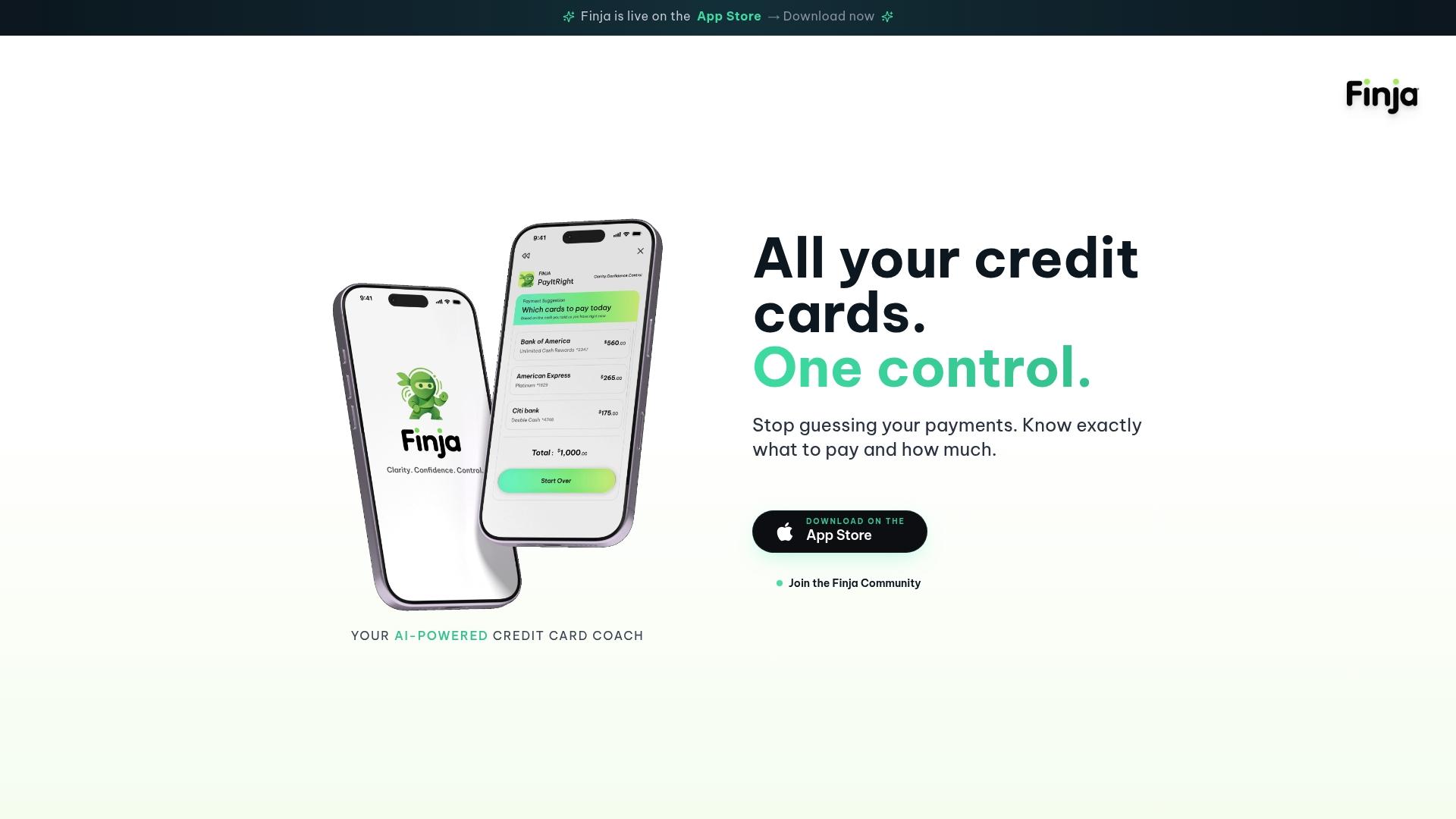
Waiting on a refund is easier when you can see every card balance in one place instead of logging into four different apps to check. An app can show all your cards together, flag when a credit posts, and remind you to send a written request when an account has been closed, so you're not relying on memory to trigger your Regulation Z rights.
Finja is focused on reducing interest costs and keeping your credit health visible, rather than on maximizing rewards, which matters when a delayed refund leaves a balance sitting on a card longer than it should. If you want the fuller playbook on recovering a credit balance quickly, read our guide on getting a refund in seven days, or see how timing your payments around Regulation Z protections can reduce what you owe while you wait. Check out Finja to see how it works for your cards.
This article is general information, not a substitute for advice from a qualified financial advisor. Consult a qualified financial professional about your own circumstances before acting on anything here.
FAQ
How long does it take for a credit card refund to show up?
Most refunds post within 3 to 14 business days, though refunds involving shipped returns or closed accounts commonly take longer. Checking your online account activity rather than your statement gives you the fastest confirmation.
Why is my refund not showing up on my credit card?
The most common reasons are statement-cycle timing, where a refund posts after your statement closed and won't appear until the next cycle, or the merchant hasn't yet confirmed receipt of a returned item. A closed or canceled account also delays posting because the credit has to be routed manually.
Why do credit card refunds take so long?
A refund has to pass through the merchant, a payment processor, the card network, and finally your issuer, and each step can add processing time through batching, weekend and holiday delays, or manual review. Closed accounts slow things down further since the credit can't post automatically.
What is the 3 day rule for credit cards?
There's no universal "3 day rule" for refunds; the relevant federal protections are the seven-business-day requirement under Regulation Z after a written request for a credit balance, and the 60-day window under the FCBA to dispute a billing error. If you've seen a three-day reference elsewhere, it likely refers to a specific merchant's return policy rather than a federal rule.
Sources
- eCFR :: 12 CFR 1026.11 – Treatment of credit balances; account termination
- Fair Credit Billing Act (FCBA) — Cornell Legal Information Institute
- Using credit cards and disputing charges — FTC
- Can a refund be issued to a cancelled credit card? — FedLaws