
Most charge disputes resolve within 30 to 90 days, but your most urgent task comes first: you generally have 60 calendar days from the statement date to send written notice of a billing error. Miss that window and you can lose your legal protections entirely. Start the clock the day the disputed transaction posts, not the day it happened, and save every receipt, confirmation email, and screenshot before you make a single phone call.
TL;DR:
- Credit card issuers must acknowledge billing error notices within 30 days and resolve them within two billing cycles, capped at 90 days; pay undisputed balances.
- An electronic transfer investigation generally requires an initial decision within 10 business days; longer reviews can reach 45 or 90 days, with provisional credit.
- A dated evidence packet should pair receipts and statements with delivery records, product screenshots, and merchant communications, giving the issuer proof tied to the charge.
- For simple errors, ask the merchant to correct the charge first; contact your card issuer directly if you suspect fraud or the merchant cannot help.
Table of Contents
- Quick timeline at a glance
- Step-by-step timeline: what happens, who does it, and when
- Key deadlines and legal protections
- What evidence helps win a charge dispute?
- If a dispute stretches longer: outcomes, escalation, and what to expect
- How to file a dispute: step-by-step checklist and sample letter components
- Finja perspective: preventing dispute pain before it starts
- The real timeline bottleneck isn't regulation, it's documentation
- An alternative approach: preventing disputes before they start
- FAQ
- Sources
Quick timeline at a glance
A charge dispute moves through predictable stages, though the exact pace depends on your card network and the type of error you're reporting.
- Day 1 to 3: The transaction posts to your account. Pending charges can't be disputed yet, so confirm posting before you act.
- Day 1 to 60: You notify your issuer, ideally in writing, within the 60-day billing-error window.
- Within 30 days of your notice: Your issuer must acknowledge receipt of your dispute under Reg Z.
- Within 10 business days (electronic transfers): A preliminary investigation wraps up, often with provisional credit issued under Regulation E.
- Up to 45 days: Extended investigation window for electronic fund transfer errors that need more digging.
- Up to 90 days (two billing cycles): The outer limit for credit card billing-error resolution, and the special-case ceiling for certain electronic transfers.
Simple disputes, like a duplicate charge, often close in under two weeks. Complex cases involving merchant disputes over goods or services, or cross-border transactions, tend to run closer to the 90-day ceiling.
Step-by-step timeline: what happens, who does it, and when

Before anything else, confirm the charge has actually posted. A pending authorization hold isn't a finalized transaction, and most issuers, including Chase, recommend waiting one to three days after the transaction date to check your account before filing. Disputing a pending charge too early just delays the process.
Contacting the merchant directly is optional but often faster for simple fixes like a wrong amount or an easy return. If the merchant resolves it, you avoid the formal dispute process altogether. If not, or if you suspect fraud, go straight to your issuer.
- You contact your issuer. Most people start by phone or through the issuer's app, which triggers an informal investigation. If your issuer requires written confirmation of an oral notice, you typically have a short window, often cited as around 10 business days, to follow up in writing.
- Your issuer acknowledges the dispute. Under Reg Z, a creditor must mail or deliver written acknowledgment within 30 days of receiving your billing-error notice, unless the issue is resolved within that same window.
- Provisional credit may post. For electronic fund transfers under Regulation E, your institution generally must complete its initial investigation within 10 business days and, if it needs more time, issue provisional credit while the investigation continues.
- The merchant responds. Your issuer reaches out to the merchant's bank for transaction records, proof of delivery, or a rebuttal. This exchange is often the slowest part of the process, especially when the merchant is slow to respond or located overseas.
- The issuer closes the investigation. For credit card billing errors, Reg Z sets an outer limit of two complete billing cycles, never more than 90 days, from receipt of your notice.
Timing shifts depending on the transaction type, and for travel-related disputes, specialized rules and protections apply that differ by jurisdiction, as explained clearly in travel chargeback guidelines. Card-not-present purchases, recurring subscriptions, and electronic fund transfers each carry slightly different evidence requirements and, for EFTs, a distinct 10/45/90-day sequence under Regulation E rather than the two-cycle Reg Z standard that governs most credit card billing disputes.
Key deadlines and legal protections
Two separate federal frameworks govern dispute timing, and knowing which one applies to your situation matters. Credit card billing errors fall under Regulation Z, specifically 12 CFR 1026.13, while debit card transactions and other electronic fund transfers fall under the Electronic Fund Transfer Act and its implementing rule, Regulation E.
The 60-day notice deadline is the one consumers most often miss. You have 60 calendar days from the date your statement was mailed to send a written billing-error notice. Phone calls help, but a written notice preserves your legal rights in ways a verbal complaint alone does not.

Once your issuer receives that notice, Reg Z requires written acknowledgment within 30 days and a final resolution within two complete billing cycles, capped at 90 days. During that window, you aren't required to pay the disputed amount, though you remain responsible for the rest of your balance.
Electronic transfers move on a different clock entirely:
| Protection | Governing rule | Key deadline |
|---|---|---|
| Written billing-error notice | Reg Z, 12 CFR 1026.13 | 60 days from statement date |
| Creditor acknowledgment | Reg Z, §1026.13 | 30 days from notice |
| Final resolution (credit card) | Reg Z, §1026.13 | Two billing cycles, max 90 days |
| Initial EFT investigation | Reg E, 12 CFR 1005.11 | 10 business days |
| Extended EFT investigation | Reg E, §1005.11 | 45 days (90 days in special cases) |
When a creditor misses these deadlines, the consequences generally favor you: Reg Z typically requires the creditor to credit the disputed amount and any related finance charges, and limits the issuer's ability to report the balance as delinquent while it's out of compliance.
What evidence helps win a charge dispute
A dispute backed by documentation moves faster and succeeds more often than one built on a phone call and a hunch. Gather these before you file:
- Receipts and order confirmations that show the exact amount, date, and merchant name matching your statement descriptor.
- Delivery tracking or return shipment records proving goods never arrived or were sent back.
- Screenshots of product pages or pricing when the dispute involves a mismatch between what was advertised and what was charged.
- Merchant communications, including emails and chat transcripts, organized into a dated chronology showing your attempts to resolve the issue directly.
- Bank or card statements with the disputed charge clearly marked, so your issuer can match your claim to the exact transaction line.
If you're unsure which charge on your statement you're even disputing, comparing it against real statement examples of oddly labeled or hidden fees can help you identify the merchant descriptor before you call.
If a dispute stretches longer: outcomes, escalation, and what to expect
Investigations run long for predictable reasons: the merchant is slow to respond, the transaction involved a cross-border settlement, or you're missing a piece of documentation your issuer needs.
- Possible outcomes include permanent credit, partial credit if only part of the charge was erroneous, the charge being upheld, or, in rare cases, the balance moving to collections if the dispute fails and you don't pay.
- If 90 days pass with no resolution, you can file a complaint with the CFPB or your state consumer protection office.
- Automatic payments and credit reporting can both be affected during a prolonged dispute, so check whether a recurring payment is tied to the disputed charge and confirm with your issuer whether the balance will be reported as current while under investigation.
A dispute that ends unfavorably doesn't have to end in collections; understanding that process in advance helps you weigh whether to escalate or pay and move on.
How to file a dispute: step-by-step checklist and sample letter components
Filing efficiently saves weeks. Follow this sequence:
- Confirm the charge has posted (not pending) before contacting anyone.
- Call your issuer to start the dispute and ask whether written confirmation is required.
- Send written notice within 60 days of your statement date, even if you already called.
- Respond immediately to any document requests from your issuer during the investigation.
Your written notice should include your name, account number, the dollar amount in question, the transaction date, and a concise statement describing the error, following the format outlined in the FTC's sample dispute letter.
If your card was lost or stolen, report it immediately and follow up in writing. Your protections can depend on how quickly you report it.
That guidance comes from the FTC, and it applies even when the fraudulent charge itself is small.
Pro Tip: Combine your receipt, delivery proof, and a dated timeline of events into a single PDF before uploading it to your issuer's dispute portal. One clean file moves faster through review than five separate attachments.
Finja perspective: preventing dispute pain before it starts
Most disputes trace back to confusion: a forgotten subscription, a due date that slipped by, a receipt that got deleted. Keeping payment dates and card activity organized across accounts won't stop fraud, but it closes the gap where legitimate charges get misidentified as errors. Centralizing records, including due dates and recent statements, means you can assemble a dispute packet in minutes instead of digging through months of email. Our guide to managing due dates covers one piece of that organization in more depth.
The real timeline bottleneck isn't regulation, it's documentation
The federal deadlines get most of the attention, but they rarely cause the delays that frustrate people. The 30-day acknowledgment and 90-day resolution windows are generous by design, meant to give issuers room to investigate, not to punish consumers who file promptly. What actually slows a dispute down is a missing receipt, a vague description of the problem, or a consumer who waits past the 60-day notice window because they assumed a phone call was enough.
The conventional advice, "call your card company," undersells the paperwork. A dispute is a documentation exercise wearing a phone call's clothing. The reader who wins fastest isn't the one who disputes first. It's the one who disputes with a dated chronology, a clear dollar figure, and proof already in hand. Prioritize organization before you prioritize speed, because a fast dispute with weak evidence still loses, and a well-documented one rarely needs the full 90 days anyway.
— Grace K.
An alternative approach: preventing disputes before they start
We built our credit card management app to catch the problems that turn into disputes before they reach your statement: a card you forgot you had, a due date you missed, a payment you can't quite place. Rather than chasing rewards, our AI-powered credit card coach centralizes every card in one place and flags payment timing issues before they cause confusion.
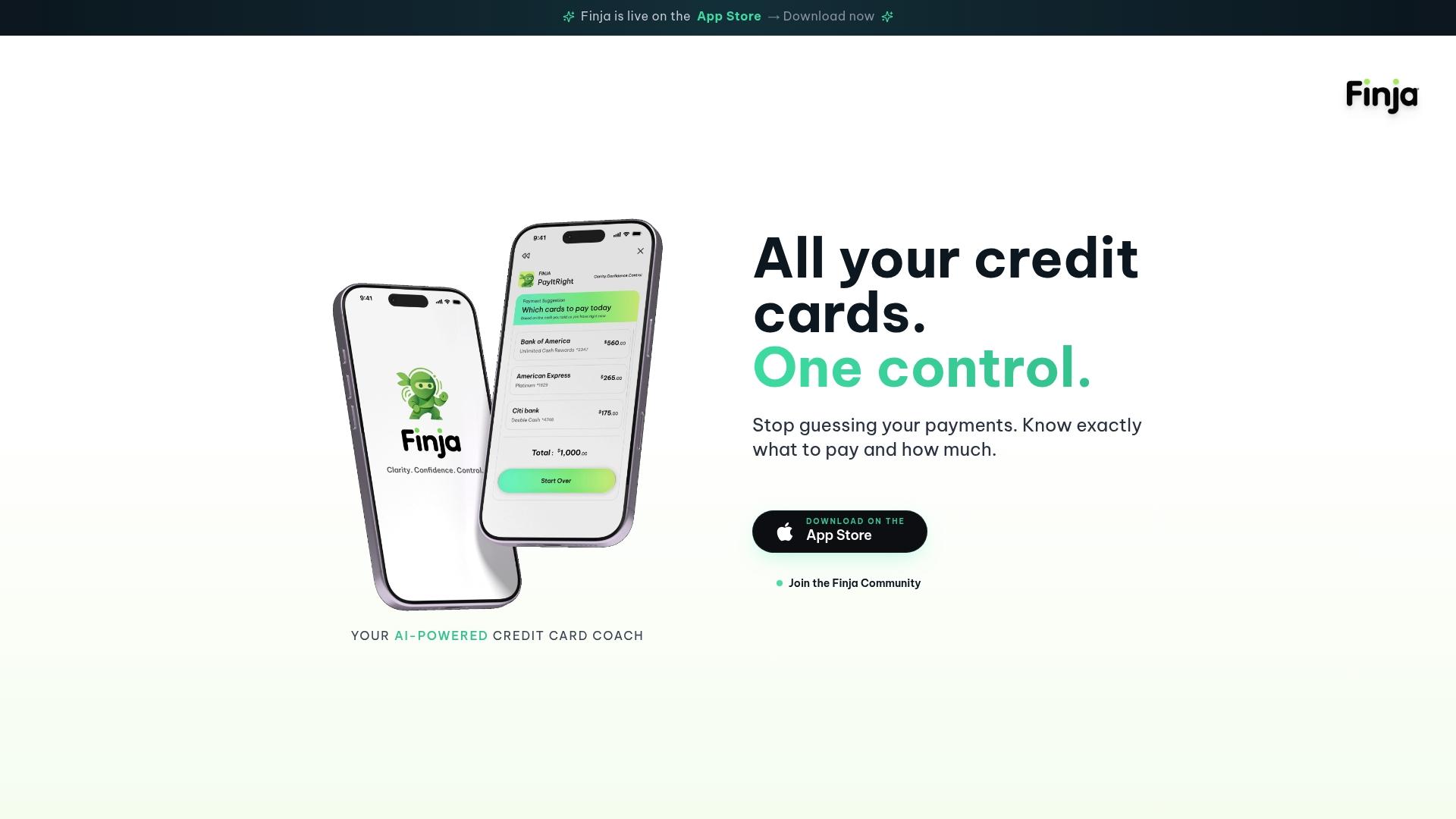
Reg Z gives you 60 days to file a billing-error notice, a deadline that's easy to miss when your cards and due dates live in five different apps. Keeping everything visible in one dashboard means you're less likely to need that deadline in the first place. See how it works at Myfinja.
This article is general information, not a substitute for advice from a qualified financial advisor. Consult a qualified financial professional about your own circumstances before acting on anything here.
FAQ
How long does it take to dispute a charge and get money back?
Simple disputes can resolve in under two weeks, but the legal outer limit for credit card billing errors is two billing cycles, never more than 90 days, from when your issuer receives your notice. Electronic fund transfer disputes move faster, with an initial 10-business-day investigation under Regulation E.
What evidence helps win a charge dispute?
Receipts, delivery tracking, screenshots of product listings, and a dated chronology of your communications with the merchant all strengthen your case. Bank statements that clearly identify the disputed transaction help your issuer match your claim to the correct charge.
What happens if a credit dispute is not resolved in 30 days?
Thirty days is the deadline for your issuer to acknowledge your dispute, not to resolve it entirely. The full resolution deadline under Reg Z is two billing cycles, capped at 90 days, and if your issuer misses its own procedural deadlines, it generally must credit the disputed amount.
Can I dispute a transaction from 2 years ago?
Generally no. You typically have 60 calendar days from the statement date showing the charge to send a written billing-error notice, and missing that window usually forfeits your formal dispute rights under federal law.
Sources
- § 1026.13 Billing error resolution. | Consumer Financial Protection Bureau
- eCFR :: 12 CFR 1005.11 -- Procedures for resolving errors.
- eCFR :: 12 CFR 1026.13 -- Billing error resolution.
- Sample letter disputing credit and debit card charges | FTC