
AZEO stands for All Zero Except One: you report a $0 balance on every card except one, which carries a small, non-zero balance. The goal is to keep your overall utilization close to rock bottom while still showing a lender that you actively use credit. Most practitioners aim for that one card to report somewhere between 1% and 9% utilization.
TL;DR:
- Keep one card’s reported balance below 9% of its limit, often near 1%; pay every other card to $0 before statements close.
- Issuers usually report the balance at statement closing, not the due date; pay the selected card’s statement balance by its due date to avoid interest.
- Some issuers report at month end or outside the statement cycle, so test a charge or ask when balances reach the bureaus.
- Use AZEO temporarily before a mortgage, auto loan, or card application; for everyday credit health, keep utilization low and pay balances in full instead.
Table of Contents
- How the AZEO method works in practice
- Why a small balance can beat a zero balance on your FICO score
- How to set up AZEO on your own cards
- Issuer reporting quirks that can throw off your timing
- Managing AZEO timing across multiple cards with an AI coach
- AZEO versus everyday low utilization: when each one earns its place
- Let Finja handle the timing so you don't have to
- FAQ
- Sources
How the AZEO method works in practice
AZEO is a reporting trick, not a spending plan. You still use your cards normally; you just control what shows up on your credit report on the day each issuer sends data to the bureaus. Everything reports at $0 except one account, which reports a small balance instead of nothing.
The common shorthand among credit-focused forums is to keep that one card's reported balance under 9% of its limit, often closer to 1% and 8.9%. Say you have a card with a $10,000 limit. A reported balance anywhere from about $100 to $890 fits the typical AZEO range.
A few things to keep in mind before you start:
- AZEO is mainly a short-term tactic, useful in the weeks before a mortgage, auto loan, or new credit card application.
- It works alongside your existing cards; you don't need to open new accounts to use it.
- The "one" card doesn't have to be the same one every cycle, though picking one and sticking with it makes tracking easier.
Think of it as a finishing touch rather than a credit-building habit you maintain indefinitely.
Why a small balance can beat a zero balance on your FICO score
Amounts owed, which is really about credit utilization, makes up roughly 30% of a FICO score, more than any other factor besides payment history. That weight is exactly why utilization tactics like AZEO get so much attention.
Nearly a third of your FICO score comes from amounts owed, according to myFICO, which is why even small shifts in reported balances can move your score.
Scoring models look at two layers of utilization: your overall ratio across all cards combined, and the ratio on each individual card. A card reporting 0% looks clean, but a report where every single card shows $0 can sometimes read as a lack of recent activity rather than responsible management. A small reported balance on one card signals that the account is active and being paid down, which some scoring models reward more than total dormancy.

You don't need to chase an exact 1%. Experian notes that keeping utilization under 10% is generally favorable, with under 30% as a broader rule of thumb. The precision matters less than staying consistently low, so a reported balance anywhere in the low single digits accomplishes the same thing as hitting 1% exactly.

How to set up AZEO on your own cards
Executing AZEO is mostly about timing, not math. Here's the order that works:
- Pick your reporting card. Many people choose their highest-limit card, since a given dollar balance produces a lower percentage on a bigger limit.
- Calculate your target balance. Add up that card's limit, then aim for roughly 1% to 9% of it. On a $15,000 limit, that's a target range of about $150 to $1,350.
- Make a small purchase before the statement closing date. The balance that reports to the bureaus is what shows on your statement closing date, not what you owe on your due date.
- Pay every other card to $0 before their statement closes. That's what produces the "all zero" part of AZEO.
- Pay the reporting card's full statement balance by the due date. This avoids interest entirely; you're controlling what gets reported, not carrying debt.
- Check your issuer's online portal and your credit reports a few weeks later to confirm the balances reported as planned.
The distinction between your statement closing date and your due date is the whole mechanism here; if you need quick funds in an emergency, Avoid Cash Advance Fees When Using a Credit Card Bail Bond can help you manage payment options wisely. myFICO confirms that issuers typically report the statement closing balance, which is often weeks before the payment is actually due. Paying in full by the due date means you never owe interest, even though a small balance briefly appeared on your credit report.
Pro Tip: Set a calendar reminder for three days before each card's statement closing date, so you have time to make or pay down a purchase before the balance locks in for reporting.
If you're juggling due dates and closing dates across several cards, a structured approach to payment timing makes it easier to keep track of which card does what each month.
Issuer reporting quirks that can throw off your timing
AZEO assumes you know exactly when each issuer reports to the bureaus, but that schedule isn't universal. Most issuers report on or near the statement closing date, but some issuers use month-end or off-cycle reporting instead, which can throw off a carefully timed balance.
A few ways practitioners work around this:
- Make a small test charge and watch which statement cycle it shows up on your credit report.
- Call issuer customer service and ask directly when they transmit balance data to the bureaus.
- Check forum threads where other cardholders have documented specific issuers' reporting quirks.
- Use a recurring small charge, like a streaming subscription, so a low balance reports automatically every cycle without manual effort.
- Make several small payments throughout the cycle rather than one lump payment, reducing the chance of a miscalculated balance landing on the wrong statement.
Once you've confirmed an issuer's actual schedule, AZEO becomes far more reliable; guessing at timing is where most people's attempts fall apart. Understanding the difference between your statement balance and your current balance also helps you avoid confusing the two when you're checking your accounts.
Managing AZEO timing across multiple cards with an AI coach
Tracking statement dates, due dates, and target balances across five or six cards by hand gets tedious fast, and a missed deadline can wreck the whole setup. This is the kind of scheduling problem an automated coach handles better than a spreadsheet.
Our AI-powered platform, Finja, consolidates every card into one view and maps each issuer's reporting pattern so you can see exactly when a payment needs to happen relative to the statement close, not just the due date.
- We flag which cards need to hit $0 before closing and which one should carry your small target balance.
- We time payments to protect your interest-free grace period while still shaping what gets reported.
- We complement AZEO with broader prioritization tactics, like paying down the highest-interest balances first, so your utilization strategy and your interest costs move in the same direction.
AZEO versus everyday low utilization: when each one earns its place
AZEO is worth setting up when you have a mortgage, auto loan, or new card application on the horizon and want a quick, temporary score bump. For everyday credit health, the better habit is simpler: keep utilization consistently low across all cards and pay in full every month. Never carry a balance just to game a score. The interest you'd pay almost always outweighs a few points of score improvement.
— Grace K.
Let Finja handle the timing so you don't have to
Coordinating statement dates, due dates, and target balances across several cards is exactly the kind of recurring, detail-heavy task that's easy to get wrong by hand. We built Finja as an AI-powered credit card coach that maps your issuers' reporting schedules and tells you when to pay, how much to leave reported, and which card should carry that small AZEO balance.
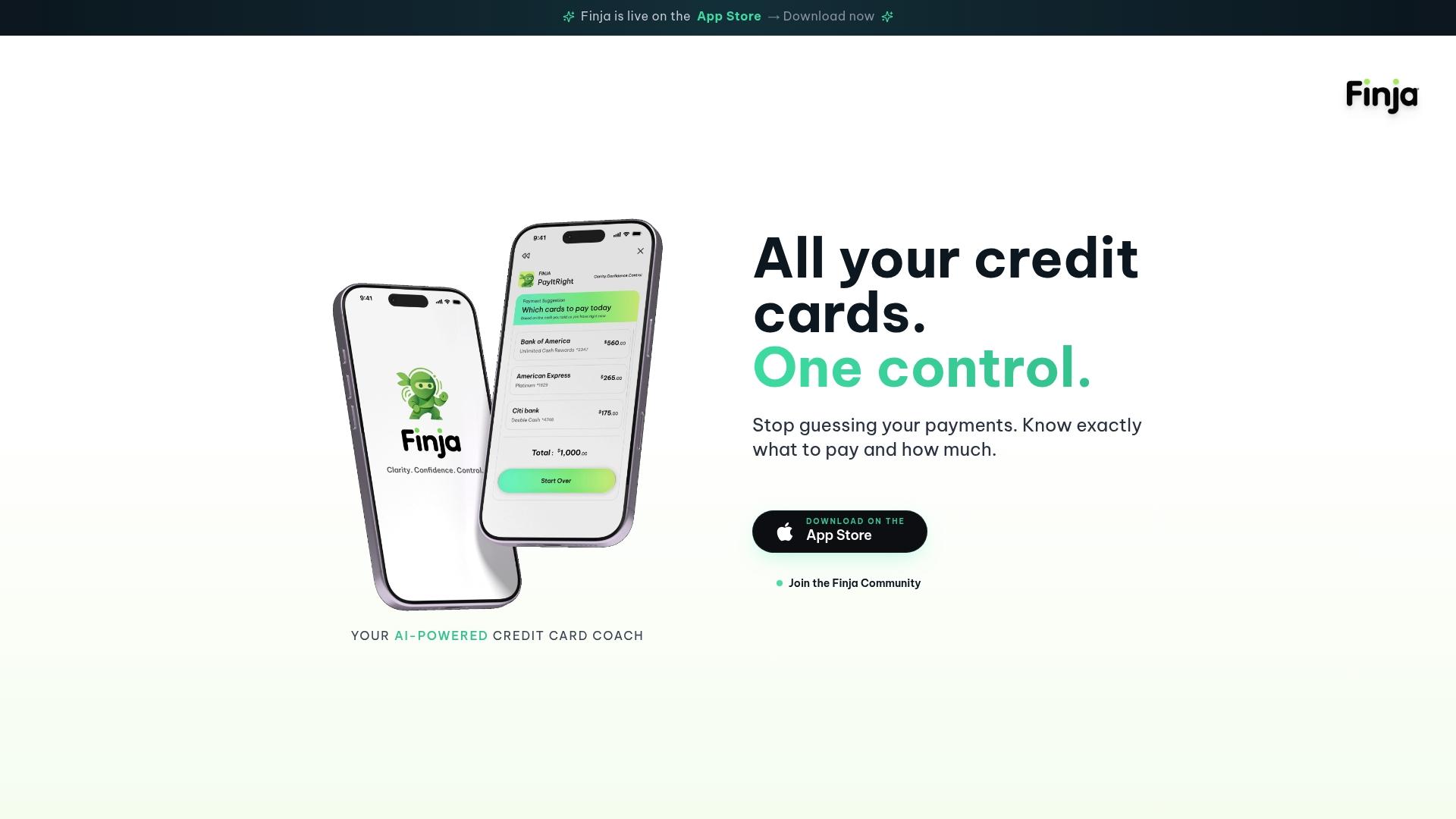
Instead of juggling calendar reminders for six different closing dates, you get one consolidated view and a clear recommendation each cycle. Check out Finja and see how it fits into your credit utilization routine.
This article is general information, not a substitute for advice from a qualified financial advisor. Consult a qualified financial professional about your own circumstances before acting on anything here.
FAQ
How does a credit card affect your credit score?
Your credit card activity affects your score mainly through payment history and amounts owed, which together make up the majority of a FICO score, with amounts owed alone contributing roughly 30%. Reported balances, credit age, and the mix of account types also play smaller roles.
What is the adjusted balance method?
The adjusted balance method is a way of calculating interest based on your balance after payments and credits are applied during the billing cycle, rather than your balance at the start or end of it. It's less common among major U.S. issuers today, most of which use average daily balance methods instead.
How rare is an 800 credit score?
Published data on exact score distributions varies by source and model, so an exact figure isn't settled here. What's consistent across credit education resources is that scores in that range typically require very low utilization and a long history of on-time payments.
What is the 2/3/4 rule for credit cards?
Definitions of this rule vary across personal finance sources, and there isn't one official version tied to a major credit bureau or scoring model. If you've seen it referenced for card approvals or application spacing, treat it as informal guidance rather than a documented FICO or lender policy.