
A credit card payment plan is a feature that lets cardholders split eligible purchases into fixed monthly installments instead of carrying a revolving balance. Major issuers offer these plans directly within existing accounts, with no separate loan application or new credit check required. The result is a predictable monthly payment with a defined end date, which is a fundamentally different experience from the open-ended minimum payment cycle that traps millions of cardholders in long-term debt. Understanding how these plans work, what they cost, and when to use them is the first step toward smarter credit card management.
What is a credit card payment plan and how does it work?
A credit card payment plan, also called a credit card installment plan, converts a qualifying purchase into a series of fixed monthly payments spread over a set term. Many major card issuers offer these features for purchases of $75–$100 or more, with repayment terms typically ranging from 3 to 18 months. That range gives cardholders real flexibility for purchases of different sizes.
The activation process is straightforward. Plans are pre-approved for existing cardholders and can be turned on instantly through an issuer's mobile app or website, with no new credit application required. Issuers evaluate your existing account standing rather than running a fresh credit inquiry.

Once active, the mechanics are simple. The installment payment is added directly to your minimum payment due on each monthly billing statement. You do not manage a separate account or make a second payment. As long as you pay the full minimum due, the installment is covered.
One critical detail most cardholders miss: the original purchase amount stays reserved against your credit limit for the full duration of the plan. Splitting a $1,200 laptop purchase into 12 monthly payments does not free up $1,200 in available credit immediately. Your available credit only recovers as you pay down the balance each month.
What are the benefits and costs of credit card installment plans?
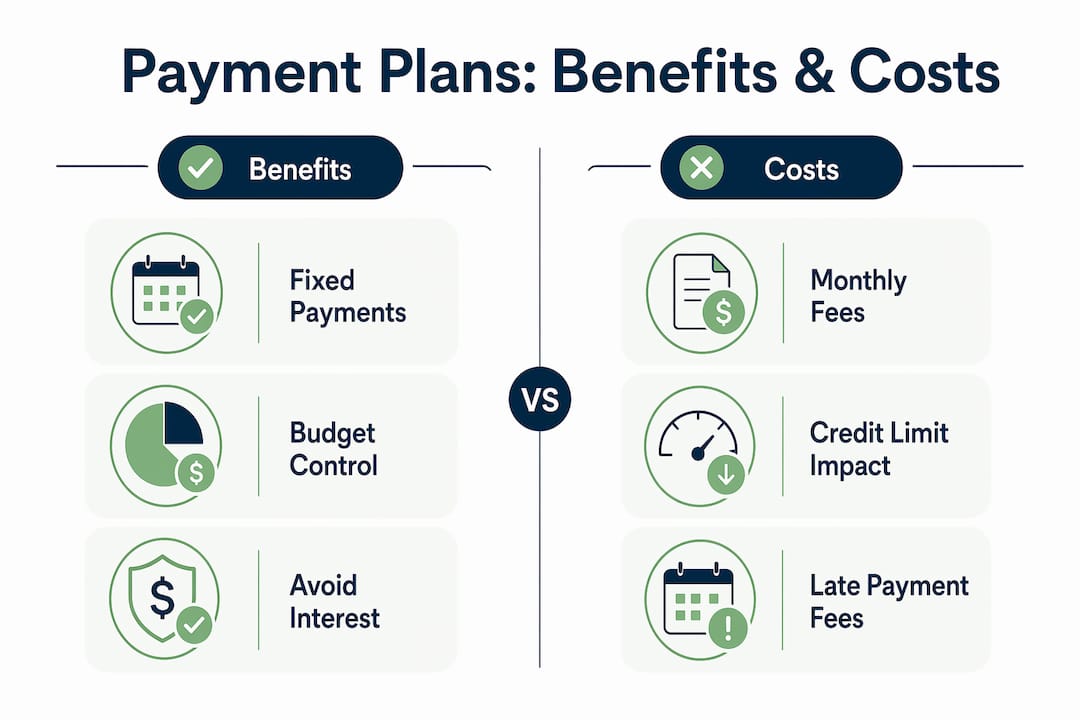
The primary benefit of a credit card installment plan is payment predictability. Fixed monthly payments with a defined end date protect you from the revolving debt cycle where minimum payments barely touch the principal. You know exactly what you owe each month and exactly when the debt ends.
Benefits at a glance:
- Predictable payments. A fixed monthly amount makes budgeting straightforward.
- Defined payoff date. Unlike revolving balances, the debt has a clear end point.
- No new credit check. Activation does not affect your credit score through a hard inquiry.
- Potential interest savings. For high-APR cards, a fixed monthly fee can cost less than carrying a revolving balance over the same period.
- Integrated billing. The installment folds into your existing statement, reducing payment complexity.
The cost side requires equal attention. Many installment plans replace standard interest with a fixed monthly fee rather than charging a traditional APR. That fee structure sounds appealing, but you must calculate the total cost across all payments to know whether you are actually saving money compared to your card's regular interest rate.
The FTC also flags specific risks worth knowing. Missing payments on installment plans can trigger late fees and credit score damage just like any other credit obligation. Cardholders using autopay linked to a debit account face overdraft risk if funds run low when the larger combined minimum payment clears.
Pro Tip: Before enrolling a purchase in an installment plan, multiply the monthly fee by the number of payments and add that total to the purchase price. Compare that number to what you would pay in interest carrying the same balance on your card's standard APR. The plan only wins if the total fee is lower.
Experts consistently caution that installment plans work best for planned, one-time large purchases. They are not a fix for ongoing revolving debt.
How do credit card payment plans compare to other payment options?
Understanding where installment plans fit among your credit card payment options helps you choose the right tool for each situation.
Paying the full balance is always the most cost-effective approach. Financial experts recommend paying the full balance each statement cycle to avoid all fees and interest. An installment plan makes sense only when paying the full amount immediately is not realistic.
Paying only the minimum is the worst outcome for most cardholders. Minimum payments on revolving balances are calculated to keep you in debt for years, with interest compounding on the remaining balance every cycle. An installment plan beats this option in almost every scenario because it forces a higher fixed payment and sets a payoff date.
The comparison with other financing options looks like this:
| Payment method | Credit check | Cost structure | Payoff timeline |
|---|---|---|---|
| Credit card installment plan | None (pre-approved) | Fixed monthly fee | Fixed term (3–18 months) |
| Balance transfer offer | Sometimes | Intro 0% then standard APR | Flexible, no set end date |
| Personal loan | Yes (hard inquiry) | Fixed APR | Fixed term |
| Revolving minimum payment | None | Variable APR on balance | Open-ended, often years |
| Buy Now, Pay Later | Soft check (varies) | Often 0% or flat fee | Short term (4–8 weeks typical) |
Balance transfer offers can beat installment plans on cost if you qualify for a 0% promotional APR and pay off the balance before the promotional period ends. The risk is that the standard APR kicks in on any remaining balance after the promotion, often at a high rate. Installment plans carry no such cliff.
Personal loans offer fixed rates and terms similar to installment plans but require a formal application and a hard credit inquiry. For a single large purchase already on your card, an installment plan is faster and simpler.
Buy Now, Pay Later programs operate outside your credit card entirely and often split purchases into four short-term payments. They suit smaller, immediate purchases but offer less flexibility on term length than card-based installment plans.
How to manage credit card payment plans for financial health
Using installment plans well requires a few deliberate habits. The credit limit impact is the most overlooked risk. Your full purchase amount stays tied up against your credit limit until the plan ends, which raises your credit utilization ratio. A high utilization ratio lowers your credit score, so enrolling multiple large purchases in simultaneous plans can hurt your credit health even if you never miss a payment.
Practical habits for managing plans effectively:
- Pay the full minimum every month. The installment amount is part of your minimum due. Paying less triggers late fees and potential plan cancellation.
- Avoid stacking multiple plans at once. Each plan reserves credit against your limit. Running three or four simultaneously can push utilization above 30%, the threshold most credit scoring models penalize.
- Review the fee before enrolling. Calculate total fees across the full term. A plan with a 1.5% monthly fee on a $1,000 purchase over 12 months costs $180 in fees alone.
- Use autopay carefully. If your autopay is linked to a checking account, confirm the account holds enough to cover the higher combined minimum payment each month.
- Match the term to the purchase. Short terms mean higher monthly payments but lower total fees. Long terms ease monthly cash flow but increase total cost.
Pro Tip: Use a credit card financial model to map out the total cost of a plan before you enroll. Seeing the full fee total in one number often changes the decision.
Tracking interest paid monthly gives you a clear picture of what each plan actually costs over time. Most cardholders underestimate this number until they see it laid out month by month.
Prioritize paying off any balances that carry no installment plan and no promotional rate first. Those balances accrue standard APR interest with no fixed end date, making them the most expensive debt on your statement.
Key Takeaways
A credit card installment plan is most valuable when used for planned large purchases where full immediate payment is not possible, and least valuable when used as a substitute for a real debt payoff strategy.
| Point | Details |
|---|---|
| How plans work | Installments fold into your monthly minimum payment with no separate account needed. |
| Credit limit impact | The full purchase amount stays reserved against your credit limit until the plan ends. |
| Cost structure | Monthly fees replace interest; calculate total fees across all payments before enrolling. |
| Best use case | Planned large purchases where paying the full balance immediately is not feasible. |
| Credit health risk | Stacking multiple plans raises credit utilization and can lower your credit score. |
Payment plans are a tool, not a safety net
I have watched cardholders use installment plans brilliantly and badly, often within the same year. The brilliant version looks like this: a planned $2,000 appliance purchase, split into 12 months, with fees that total less than the card's standard APR would have charged on the same balance. The cardholder knew the cost going in, budgeted for the monthly payment, and cleared the plan on schedule.
The bad version is more common. A cardholder hits a tight month, enrolls three purchases in plans to lower their immediate payment burden, and suddenly has 30% of their credit limit locked up across three plans running simultaneously. Their utilization spikes, their score drops, and the monthly minimum is now higher than before because three installment amounts are stacked on top of each other.
The difference between those two outcomes is not income or financial sophistication. It is whether the cardholder treated the plan as a deliberate financial decision or a quick fix. I always recommend calculating the total fee cost before enrolling, not after. And I strongly recommend using a tool that shows you how your multiple credit cards interact when you add installment plans to the mix. The math gets complicated fast, and gut-feel budgeting is not enough.
Finja exists precisely for this situation. It gives you the visibility to make these decisions with real numbers, not estimates.
— Grace K.
How Finja helps you manage credit card payment plans
Managing one installment plan is straightforward. Managing two or three across different cards, each with different fee structures and term lengths, gets complicated quickly.
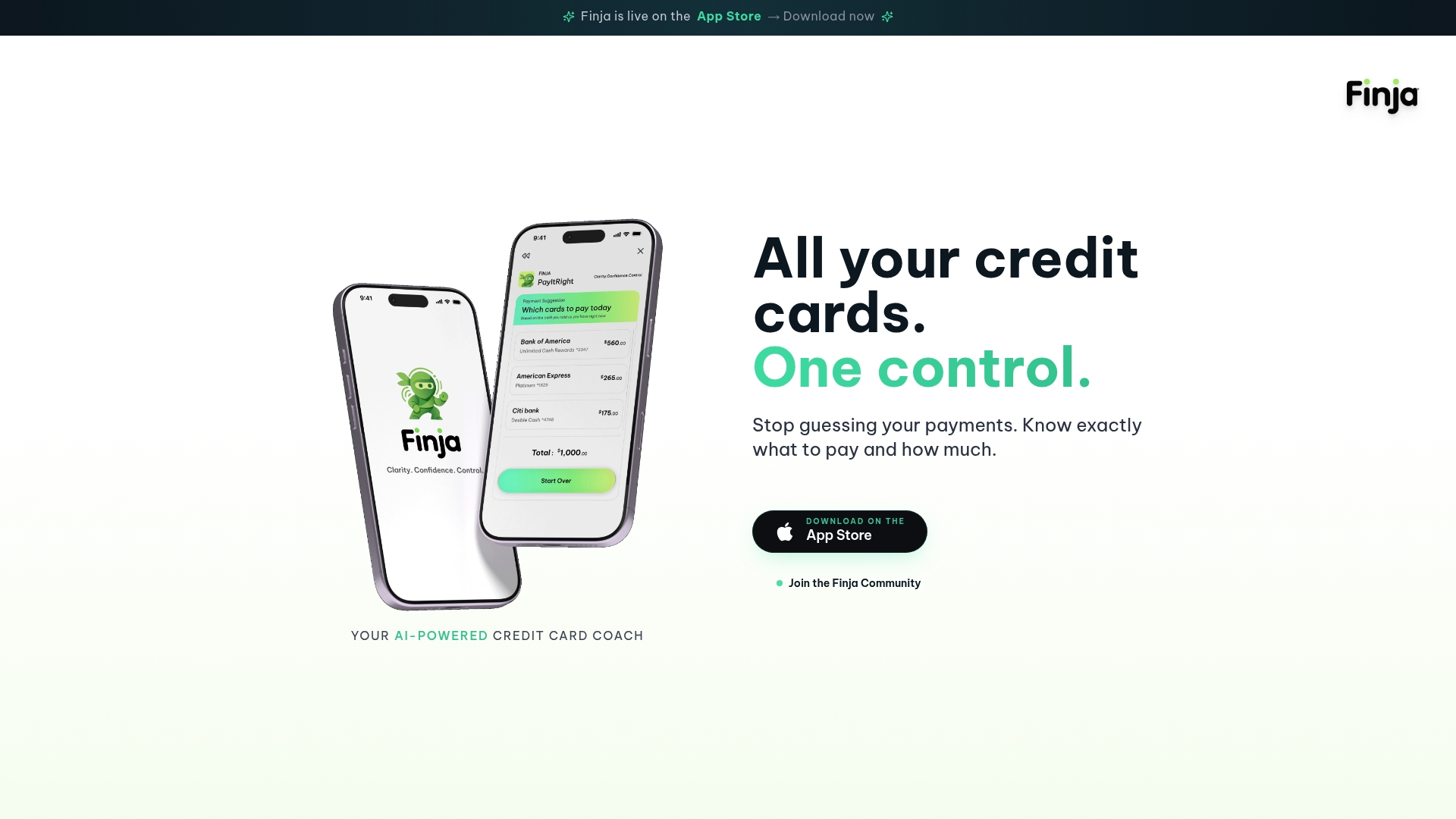
Finja is an AI-powered credit card management platform built for cardholders who want to see exactly what their payment plans cost, how they affect credit utilization, and where interest is quietly accumulating. Finja tracks your payment plans alongside your full card portfolio, flags when fees are eating into your savings, and helps you prioritize which balances to pay down first. If you carry multiple cards and want a clearer picture of your debt-free strategy, Finja gives you the tools to build one.
FAQ
What is a credit card payment plan?
A credit card payment plan is a feature that converts a qualifying purchase into fixed monthly installments over a set term, typically 3–18 months, with a monthly fee replacing standard revolving interest.
How does a payment plan affect my credit limit?
The full original purchase amount stays reserved against your credit limit for the duration of the plan. Available credit only recovers as you pay down the balance each month.
Are credit card installment plans interest-free?
Most plans are not interest-free. They replace standard APR with a fixed monthly fee, which you must calculate across all payments to compare against what standard interest would have cost.
Do installment plans require a new credit check?
No. Most card issuers pre-approve installment plans for existing cardholders, and activation through the issuer's app requires no new credit application or hard inquiry.
When should I use a credit card installment plan?
Use an installment plan for a planned large purchase when paying the full balance immediately is not possible. Avoid using plans as a recurring solution for ongoing debt, since fees accumulate and credit utilization rises with each active plan.