
The fastest way to avoid foreign transaction fees is to pay with a card that explicitly waives them and always choose local currency at checkout. Before you fly, confirm your card's fee terms and pack a backup card. At the register or ATM abroad, decline any dynamic currency conversion offer and select the local currency every time.
TL;DR:
- Foreign transaction fees typically add 1% to 3%, while dynamic currency conversion often costs more and may stack on top of issuer charges.
- A purchase shown in U.S. dollars on a foreign website can still incur a foreign transaction fee because processing location, not displayed currency, determines it.
- Withdraw larger amounts less often to avoid repeated flat ATM charges, and use a debit account that reimburses fees or has partner banks abroad.
- Visa or Mastercard usually have wider acceptance than American Express or Discover, while annual fees and exchange rate markups should factor into card choice.
Table of Contents
- How foreign transaction and conversion fees actually get charged
- Set up before you leave: what cards and cash to prepare
- At the point of sale and ATMs: exact actions that cut fees
- Choosing a travel card beyond the "no foreign fee" label
- One-page travel checklist to avoid fees
- Finja's perspective on payment decisions and fee avoidance
- What travelers consistently get wrong about these fees
- A tool that fits alongside your no-fee card
- FAQ
- Sources
How foreign transaction and conversion fees actually get charged
A foreign transaction fee is a surcharge, usually charged by your card issuer, for processing a purchase made outside the country or in a foreign currency. Currency conversion markup is separate: it is the spread a network or merchant bakes into the exchange rate. ATM operator fees are flat charges from the machine's owner, on top of whatever your bank charges for foreign withdrawals. Dynamic currency conversion, or DCC, is when a merchant or ATM offers to charge you in U.S. dollars instead of the local currency, using its own exchange rate.

Foreign transaction fees typically run 1% to 3% of the purchase, and DCC markups often sit higher than that. On a typical hotel bill, a 3% foreign transaction fee adds a noticeable surcharge, and an unfavorable Dynamic Currency Conversion (DCC) rate can increase the cost even further. Fees tied to card network processing are rarely refunded after the fact, which is exactly why avoiding them at the point of sale matters more than disputing them later.
Set up before you leave: what cards and cash to prepare
Your prep work determines whether you spend a trip fighting fees or ignoring them entirely — for tips on reducing these costs, see our guide to avoid overdraft fees.
- Carry at least one credit card that waives foreign transaction fees and confirm acceptance on Visa or Mastercard's network before you go.
- Ask your bank whether it reimburses ATM fees or has partner banks abroad, since some accounts refund foreign ATM fees while most do not.
- Exchange a modest amount of cash before departure for your first day or two, and skip large exchanges at airport kiosks, which tend to offer weaker rates.
- Turn on travel notifications with your issuer and confirm you can be reached by text or app in case of a flagged charge.
Pro Tip: Call your card issuer's number on the back of the card, not a number from an email, to confirm your travel notification actually went through.
At the point of sale and ATMs: exact actions that cut fees
Most fee damage happens in the two seconds after a cashier or ATM screen asks you a currency question.
- When a checkout screen or ATM asks "charge in dollars or local currency," always pick local currency.
- Decline any Dynamic Currency Conversion offer; Visa requires DCC screens to display both currencies, the exchange rate, and any markup, so read it before you decide.
- Use your no-foreign-transaction-fee credit card for purchases, and reserve your debit card for ATM withdrawals from an account that refunds fees.
- Withdraw larger amounts less often at ATMs to avoid stacking multiple flat withdrawal fees.
- Keep a backup card and a small amount of emergency cash in a separate bag or pocket from your primary wallet.
Pro Tip: If a DCC screen looks rushed or the markup isn't clearly listed, decline it and ask the cashier to charge the local currency instead.
A charge that shows up in U.S. dollars on a foreign website can still trigger a fee because of where it's processed, so treat every international purchase the same way regardless of the listed currency.
Choosing a travel card beyond the "no foreign fee" label
A no-foreign-transaction-fee card is the baseline, not the whole decision. A few factors separate a card that works everywhere from one that leaves you stuck at a register.
- Prioritize Visa or Mastercard for the broadest global acceptance, since American Express and Discover can be harder to use in some regions.
- Weigh annual fees against perks like travel insurance, lounge access, or chip-and-contactless support that might offset the cost.
- If you expect to withdraw cash often, favor a card or linked account that reimburses ATM fees.
- Check how the issuer actually converts currency: some post network exchange rates directly with no markup, others add a hidden spread.
Reading the fine print on travel reward card categories before you apply helps you match perks to how you actually spend, rather than chasing a sign-up bonus you won't use again.
One-page travel checklist to avoid fees
Run through this the week before departure and again once you land.
- Confirm your no-foreign-transaction-fee card is active and pack a second card as backup.
- Save the addresses of in-network ATMs and plan two or three larger withdrawals instead of many small ones.
- Carry a small amount of local cash for the first day, and skip large airport currency exchanges.
- At every checkout, choose local currency and decline DCC without hesitation.
Finja's perspective on payment decisions and fee avoidance
We built an AI-powered credit card coach because picking the right card in the moment is harder than it sounds once you're juggling more than one. Our guidance on payment timing and fixes for unexpected charges complement a no-FTF card well. Pairing a fee-free card with a tool that tracks which card to use, and when, closes the gap that a single good card can't close alone.
What travelers consistently get wrong about these fees
The conventional advice treats foreign transaction fees as a card-selection problem to solve once, before the trip. That misses where the real damage happens: at the checkout screen, when a cashier asks "dollars or local currency" and a tired traveler picks dollars because it sounds simpler. A no-FTF card does nothing if you still say yes to DCC.

The other blind spot is ATM behavior. Travelers obsess over a card's advertised fee percentage but withdraw cash five separate times, each one stacking a flat ATM fee that a single larger withdrawal would have avoided. The math on small, frequent withdrawals rarely favors convenience.
If you prioritize one thing, prioritize the decision at the point of sale, not the card in your wallet. The best card still loses money in the hands of someone who clicks "yes" on dynamic currency conversion without reading the screen.
— Grace K.
A tool that fits alongside your no-fee card
Picking one no-foreign-transaction-fee card solves part of the problem. The harder part is knowing which card to use for which purchase when you're carrying more than one, especially while juggling interest rates, due dates, and rewards categories across accounts. That's where we come in.
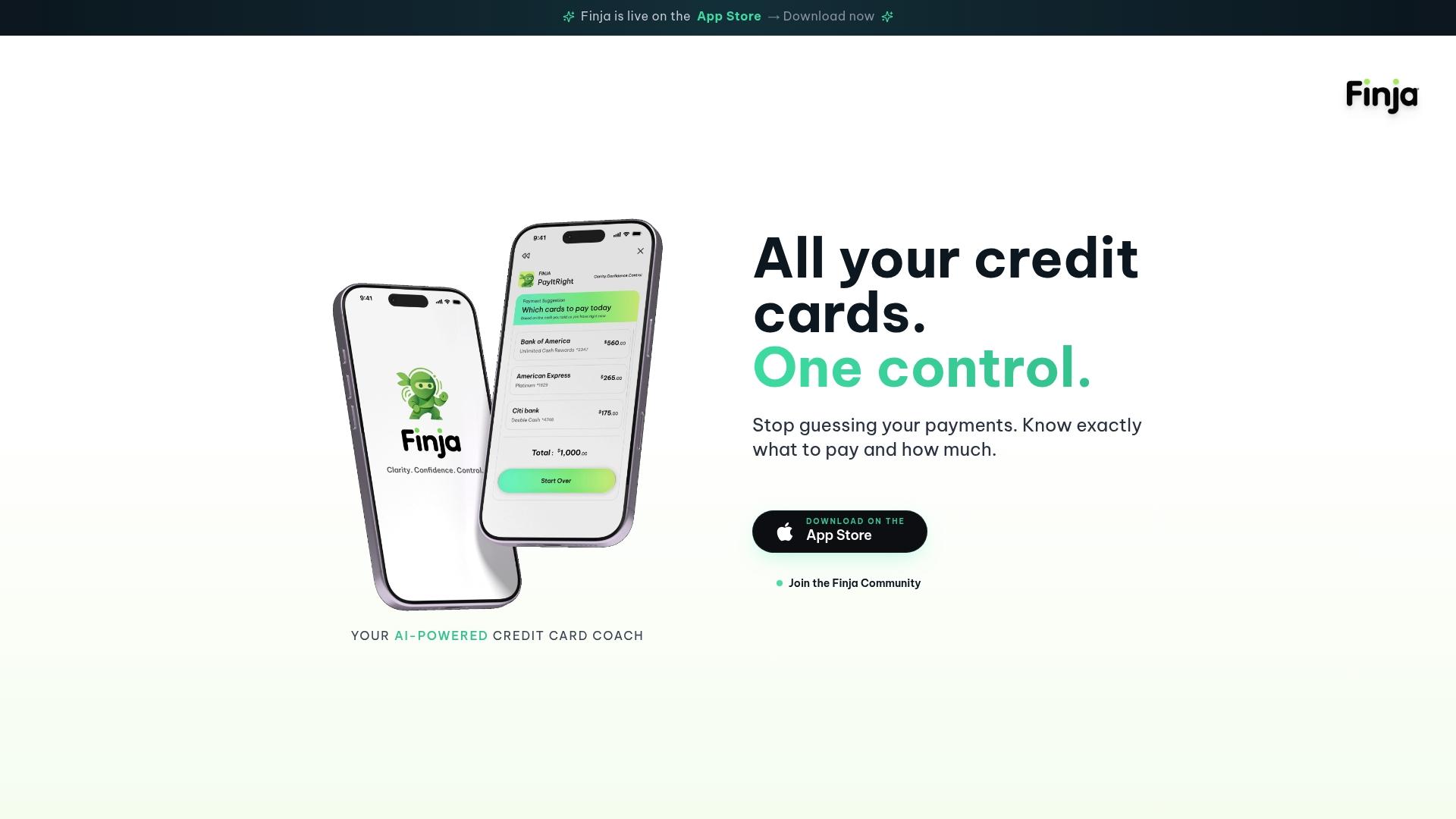
- We bring multiple cards into one view, so balances and terms can be seen without switching apps.
- AI-powered recommendations suggest which card to use for a given purchase based on interest cost and spending patterns.
- The tool fits people juggling multiple credit cards who want to cut fees and interest without tracking spreadsheets by hand.
If that sounds like your situation, visit Finja to see how the coaching works before your next trip.
This article is general information, not a substitute for advice from a qualified financial advisor. Consult a qualified financial professional about your own circumstances before acting on anything here.
FAQ
Is there a way to avoid foreign transaction fees?
Yes. Use a credit card that explicitly waives foreign transaction fees and always choose to pay in local currency rather than accepting a dynamic currency conversion offer. Confirming your card's terms before you travel is the simplest safeguard.
How can I avoid foreign currency transaction fees?
Carry a no-foreign-transaction-fee card for purchases, decline DCC at checkout and ATMs, and use a debit account that refunds ATM fees for cash withdrawals. Foreign transaction fees typically range from 1% to 3%, so avoiding them on every swipe adds up over a trip.
How do I avoid the roughly 3% international transaction fee?
Open or activate a credit card marketed as having no foreign transaction fee, and check the terms before departure since this fee is charged by the issuer rather than the merchant. Paying in local currency instead of accepting DCC also prevents a separate markup from stacking on top.
Is it better to use Visa or Mastercard abroad?
Visa and Mastercard generally offer broader global acceptance than American Express or Discover, particularly outside major cities. Either network works well for most destinations, so the card's fee structure and your issuer's terms matter more than choosing between the two.
Sources
- Dynamic Currency Conversion | Visa
- How to avoid foreign transaction fees | Experian
- Best no foreign transaction fee credit cards | U.S. News